
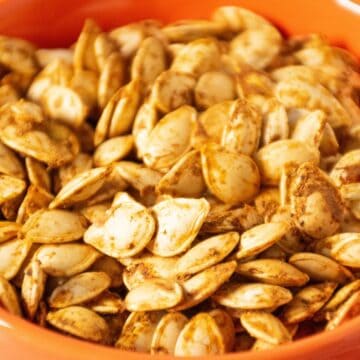
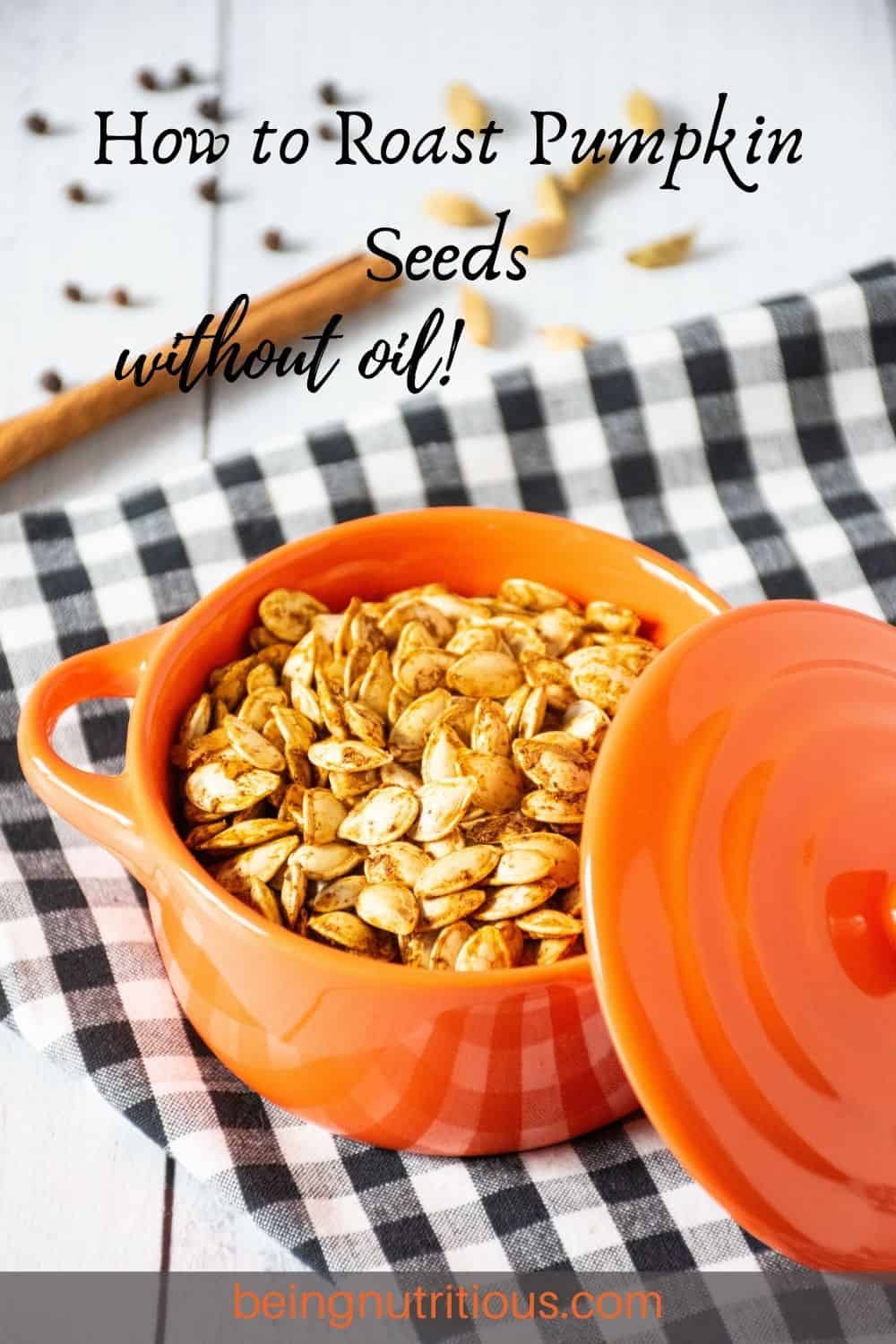
If it's pumpkin carving season, it's pumpkin seed roasting season! No matter how you season them, this is your go-to guide for how to roast pumpkin seeds. And here's a bonus: this recipe uses no oil, and no washing those seeds! Any extra pulp left on the seeds will crisp up, too, and it's really yummy! There's no way to get those seeds in the oven quicker.
This post may contain affiliate links. See our Disclaimer for more information
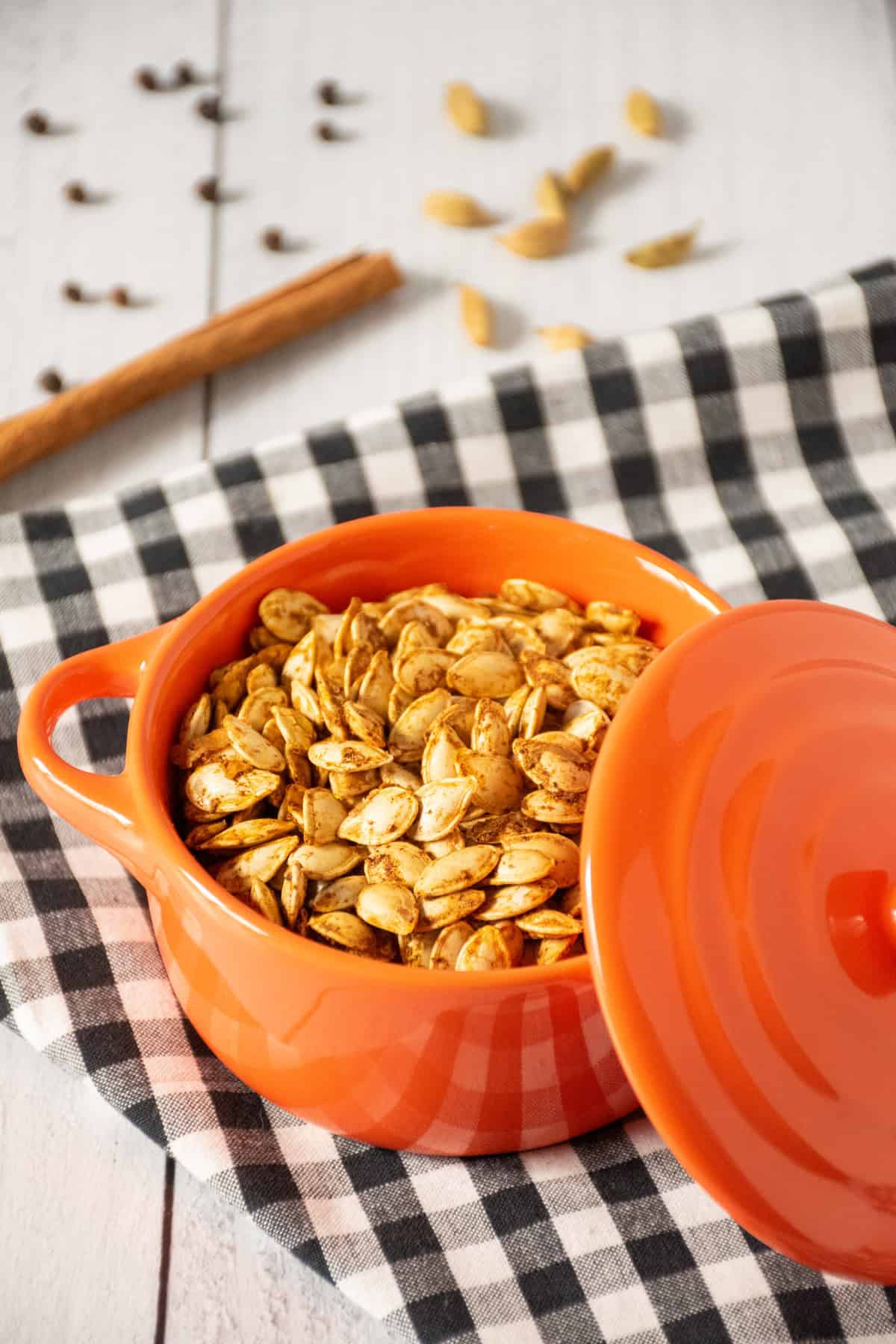
If you've ever wondered how to roast pumpkin seeds, we've got you covered! You'll love how easy it is to make this delicious crunchy snack every pumpkin carving season!
Jump to:
Heart Health Benefits of Roasted Pumpkin Seeds
These roasted pumpkin seeds are a great nutrient-dense and antioxidant filled snack. The nutrition in them can help improve lipid profiles, reduce LDL oxidation, and support blood pressure (1). Roasting them can make some of these nutrients more available for our bodies to use (2).
Macronutrients
Pumpkin seeds are high in unsaturated fat (primarily linoleic and oleic acids) and fiber. These unsaturated fats help lower the risk of heart disease, particularly when used in place of saturated fat or carbohydrate foods (3, 4).
Keeping the hull on increases the fiber (mostly insoluble fiber) to fat ratio, and also decreases the calorie content per gram (1, 5). This can potentially lead to increased feelings of satiety, which can be useful in weight management.
Micronutrients and Bioactive Components
Pumpkin seeds are also a good source of magnesium, potassium, zinc, and vitamin E. We keep this snack low sodium by using only a pinch of salt if it's needed, and amping up the phytochemical content with herbs and spices.
While the herb and spice nutrient content will vary depending on what you use, here's a run down of the phytonutrients and antioxidants in whole pumpkin seeds (unhulled):
- Linoleic acid - polyunsaturated omega-6 fatty acid that can may lower the risk of coronary heart disease (3);
- Oleic acid - monounsaturated omega-9 fatty acid that can help lower cholesterol and reduce the risk of heart disease (4);
- Insoluble fiber - type of fiber that does not dissolve in water, and helps add bulk to the stool, reducing constipation risk (6)
- Tocopherol isomers - vitamin E derivatives and antioxidants that help protect lipids from peroxidation (7);
- Phenolic compounds and flavonoids - contribute to the antioxidant effect of the seeds (1); and
- Phytosterols - bioactive compound found in plant foods that helps reduce cholesterol absorption in the intestinal tract, thereby reducing blood LDL levels (8).
Ingredients
One simple ingredient here!
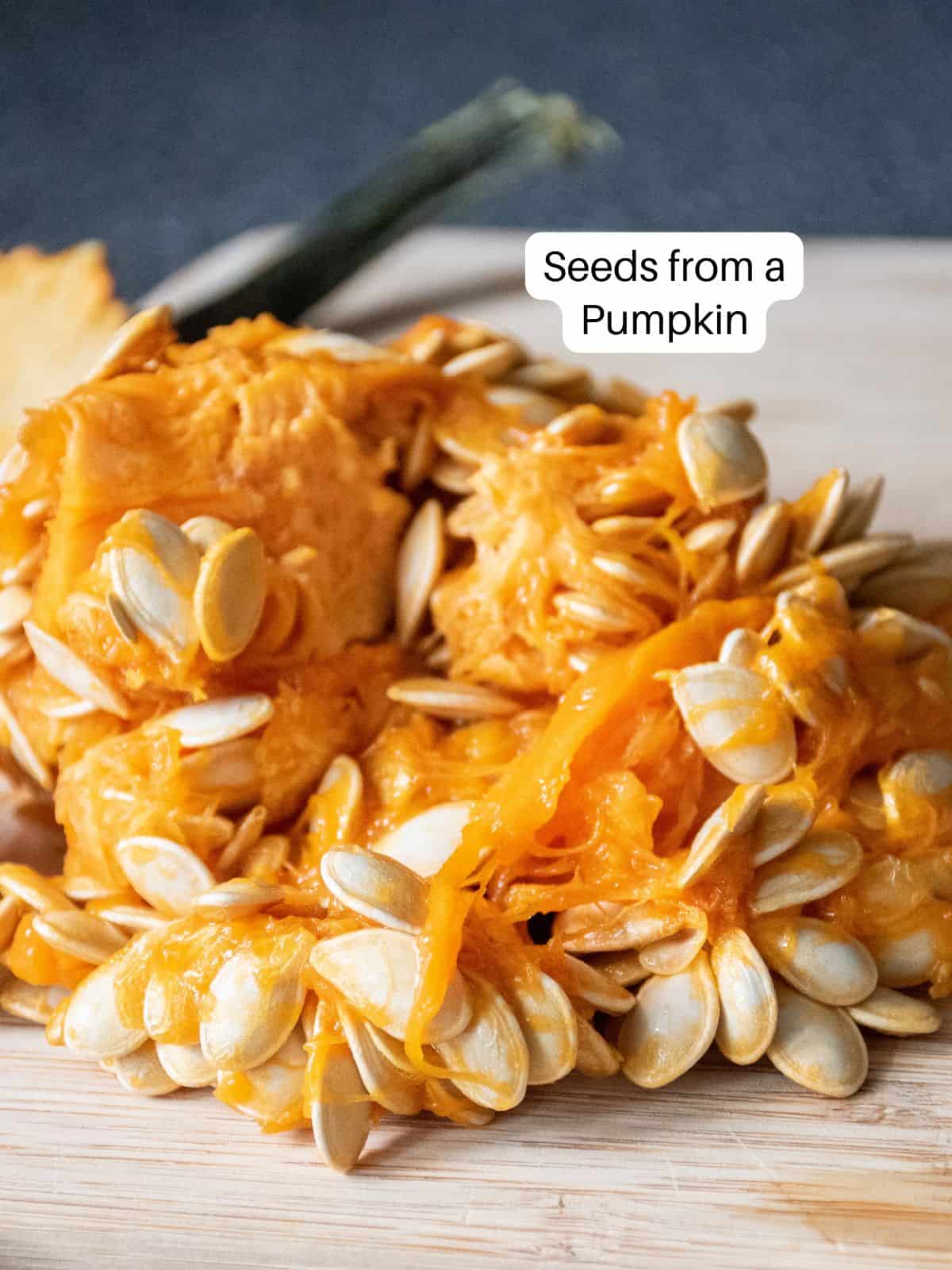
- Seeds from a pumpkin
See recipe card for quantities.
Instructions
Who knew how easy it could be to roast pumpkin seeds from your Jack-o-lantern carving activities?!
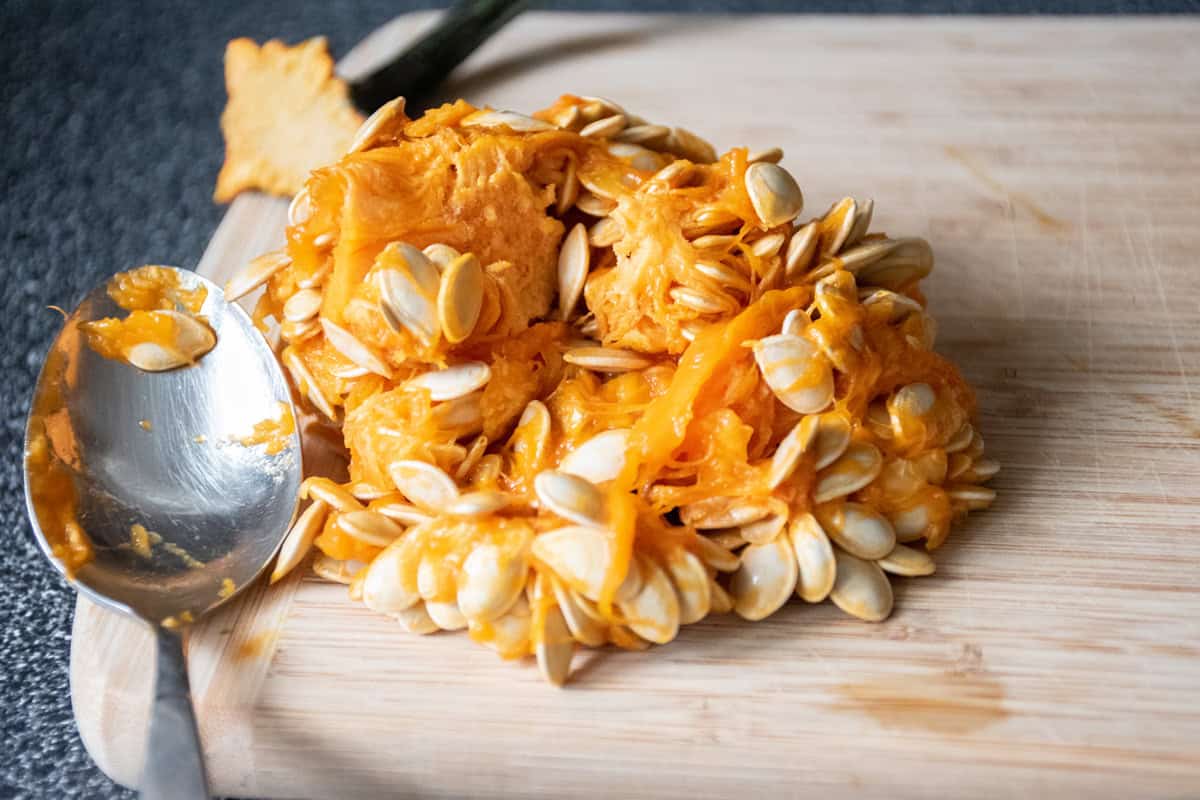
- Step 1: Remove the seeds and pulp from the pumpkin.
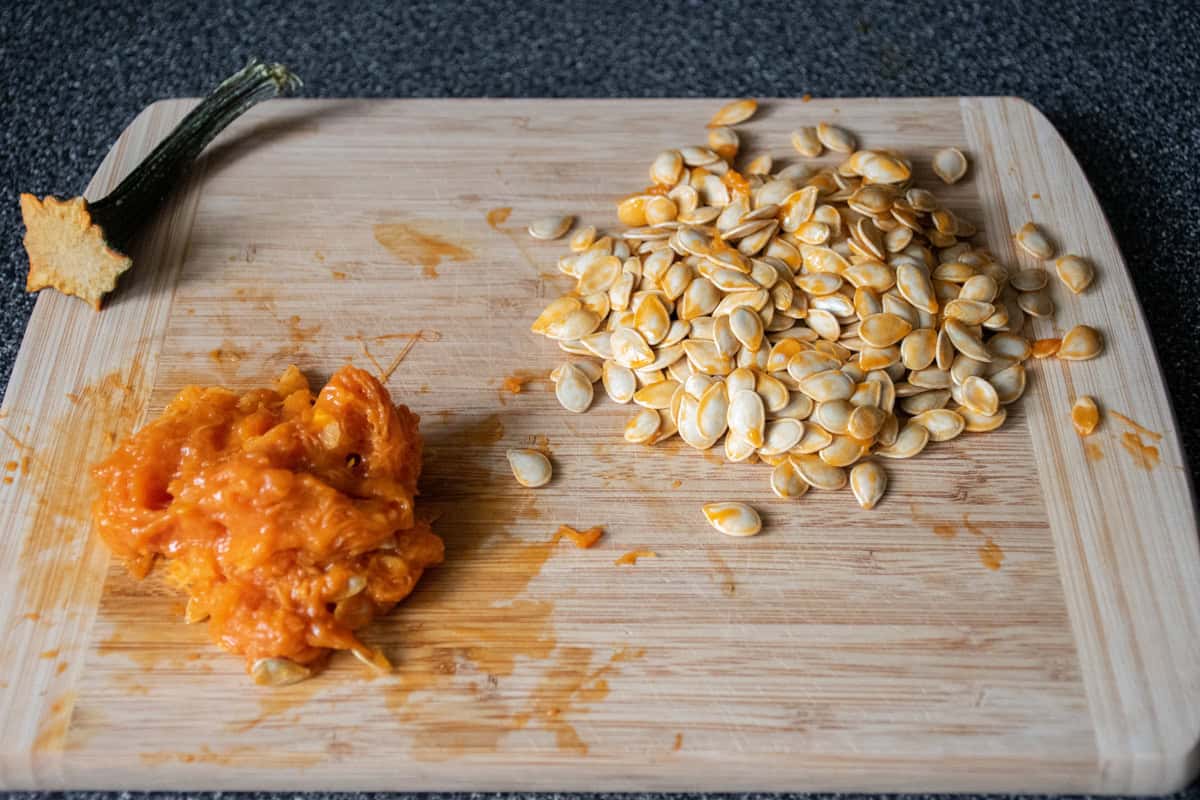
- Step 2: Separate the seeds from the pulp. It's fine if some of the pulp is still clinging to the seeds.
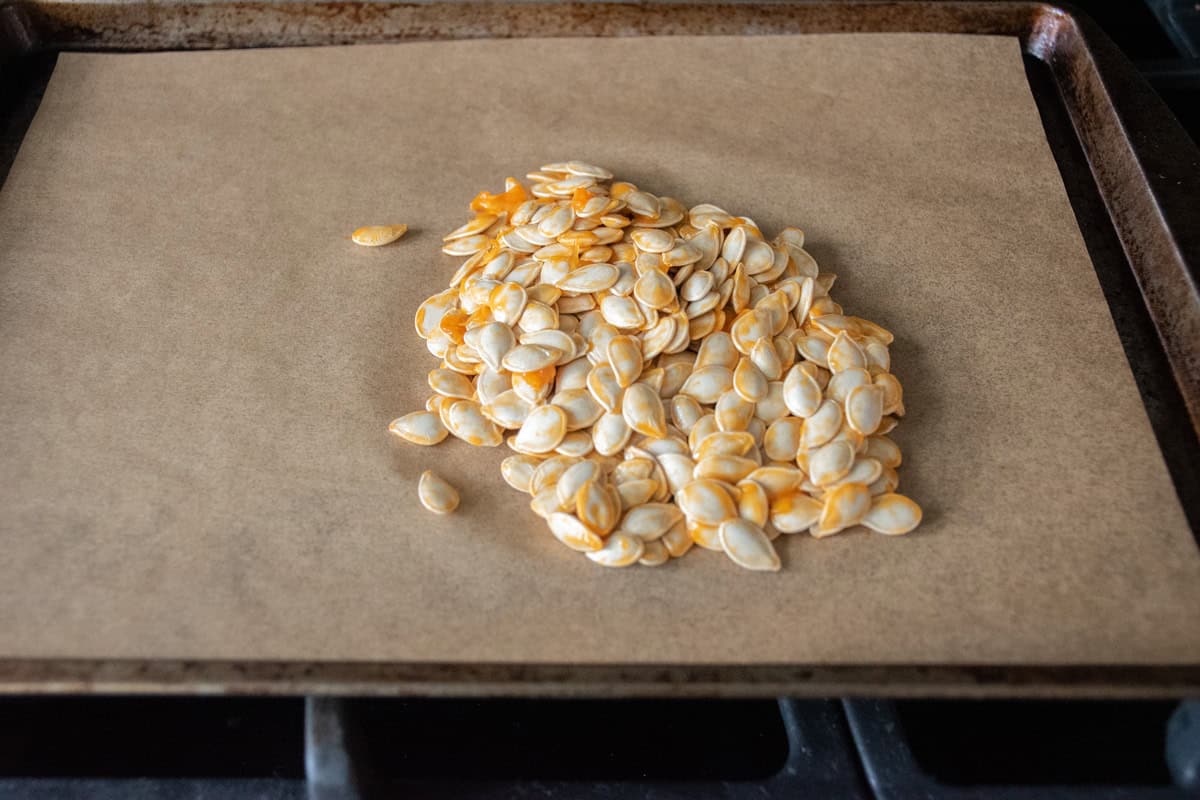
- Step 3: Transfer the seeds to a lined baking sheet, add your seasoning of choice, and spread them out as much as you can.
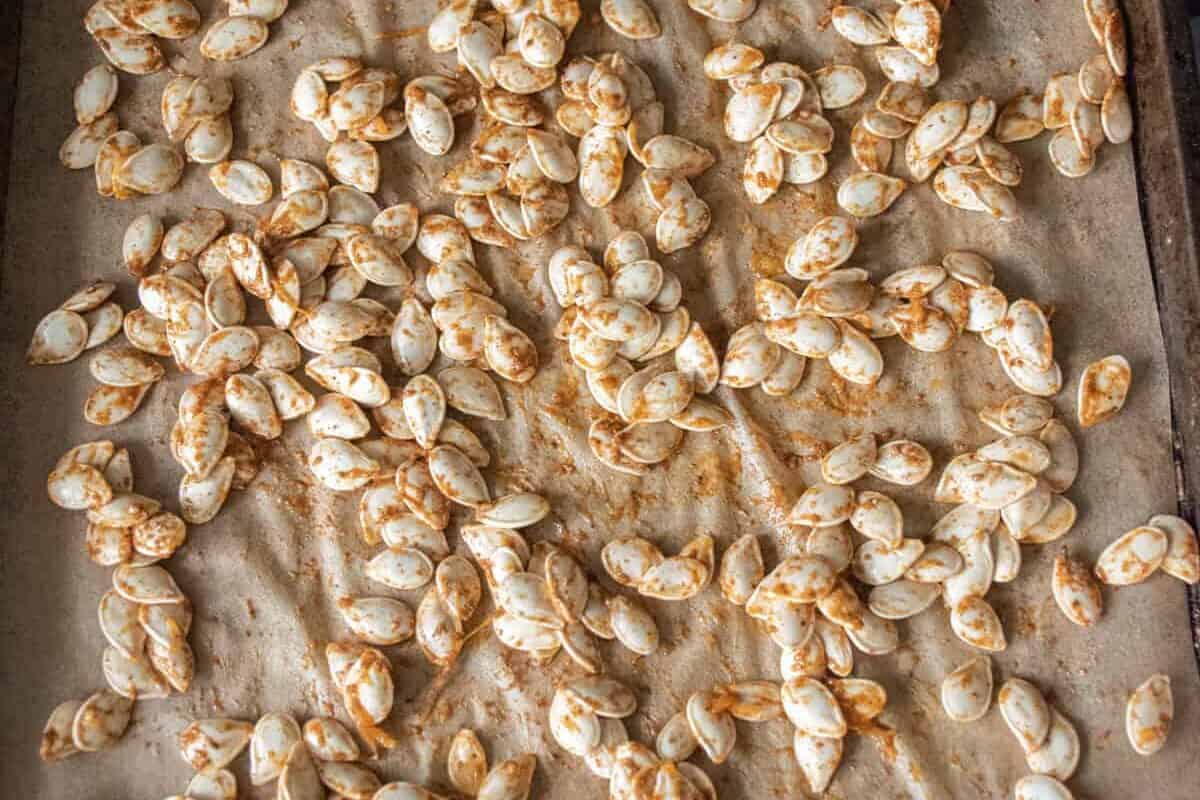
- Step 4: Bake until crispy.
Hint: a little pulp left of the seeds makes for a delicious and crispy coating, plus adds a bit of nutrition!
Variations
There are endless variations on roasted pumpkin seeds, depending on what spices you use! Here are some of my favorites!
- Taco seeds - use salt free taco seasoning for a delicious Mexican flair
- Chai seeds - use chai seasoning for a warm and spicy take
- Pumpkin spice - use pumpkin pie spice for a classic pairing
- Thanksgiving seeds - use poultry seasoning for Thanksgiving flavors
Equipment
A big spoon to scoop out the seeds and pulp from your pumpkin, and a baking sheet with parchment paper (or other liner) are all you'll need for this simple roasted pumpkin seeds recipe!
Storage
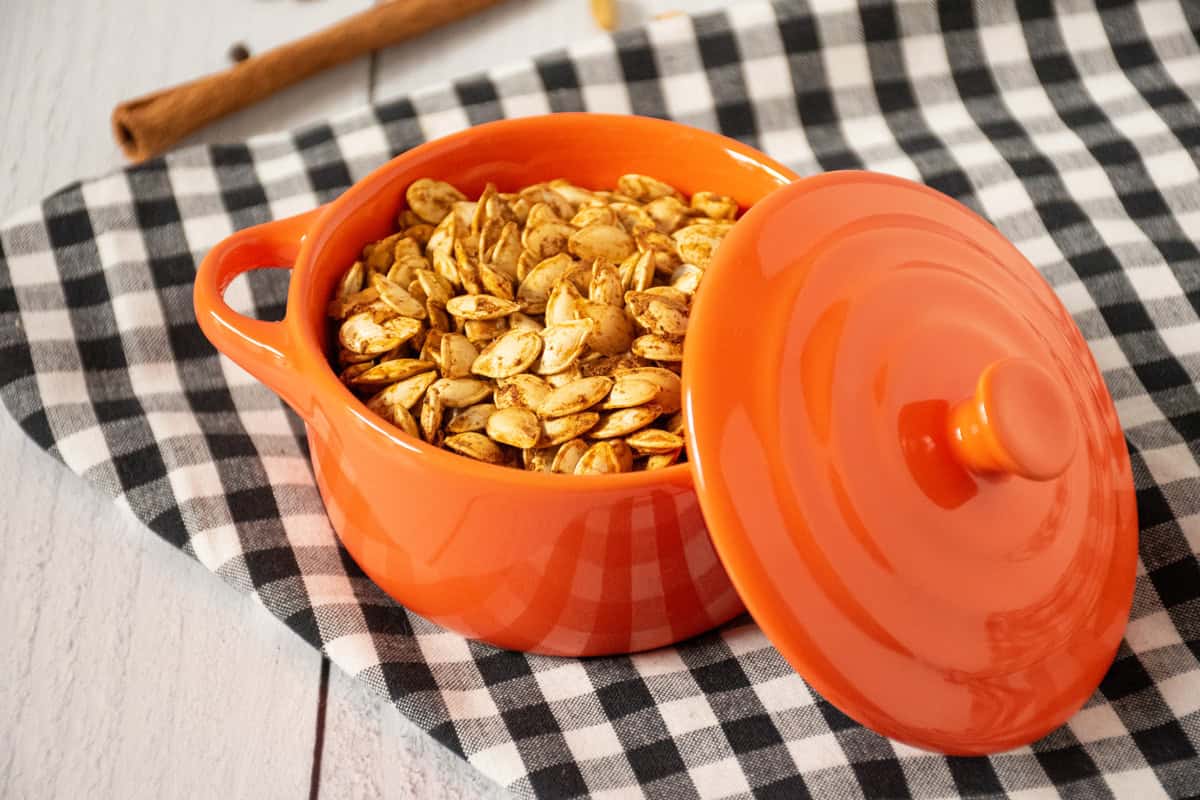
Store cooled seeds in an airtight container for up to two weeks.
FAQ
Any type of pumpkin or squash will do! Sugar pumpkins (for baking), jack-o-lantern pumpkins, or any variety of squash, like butternut, acorn, or kabocha can be used for roasting.
Yes, the white hulls (shells) are edible, and provide additional fiber and nutrition!
Pepitas are hulled pumpkin seeds; that is, pumpkin seeds without the shell. Pumpkin seeds are generally the whole thing; seed and hull. You can easily tell whether the seeds are hulled or not, because whole seeds are white in color and quite large, while hulled seeds are much smaller and green.
Related
Looking for more healthy pumpkin recipes? Try these:
📖 Recipe
Roasted Pumpkin Seeds
Equipment
Ingredients
- ½ cup Raw pumpkin seeds separated from pulp
- ¾-1 teaspoon Seasoning of choice (ex: taco, chai, Italian, etc.)
- Pinch Salt, to taste
Instructions
- Preheat oven to 400 degrees F.
- Place the raw pumpkin seeds, separated from the pulp (it's okay if there's still some clinging to the seeds that you can't get off), on a baking sheet lined with parchment paper.
- Sprinkle the seeds with the seasoning you've chosen, a pinch of salt if desired, and mix well. Spread out as much as possible.
- Bake 15-20 minutes, stirring halfway through, until the seeds and any remaining pulp are crispy.
- Store in an airtight container.
Nutrition
*Nutrition information is an estimate, and will change based on the brand and individual ingredients and amounts you use. This is provided for your convenience only.
Food safety
These are important safety tips for roasted pumpkin seeds:
- Wash hands before beginning, whenever they are soiled, and after touching face, hair, pets, etc.
- Never leave cooking food unattended
- Keep your face back when opening the oven to avoid hot air burns
- Always remove items from the oven with appropriate pot holders or mitts to avoid burns
Leave a Reply