
Whether you're in a lunch rut and need something new, or you're looking to totally overhaul your eating habits, we've got a variety of heart healthy high protein lunches that will hit the spot. They're packable, meal prep friendly, and totally plant based, so you can feel your best every day!
Take me straight to the recipes, or read on for some great meal prep tips first!
This post may contain affiliate links. See our Disclaimer for more information
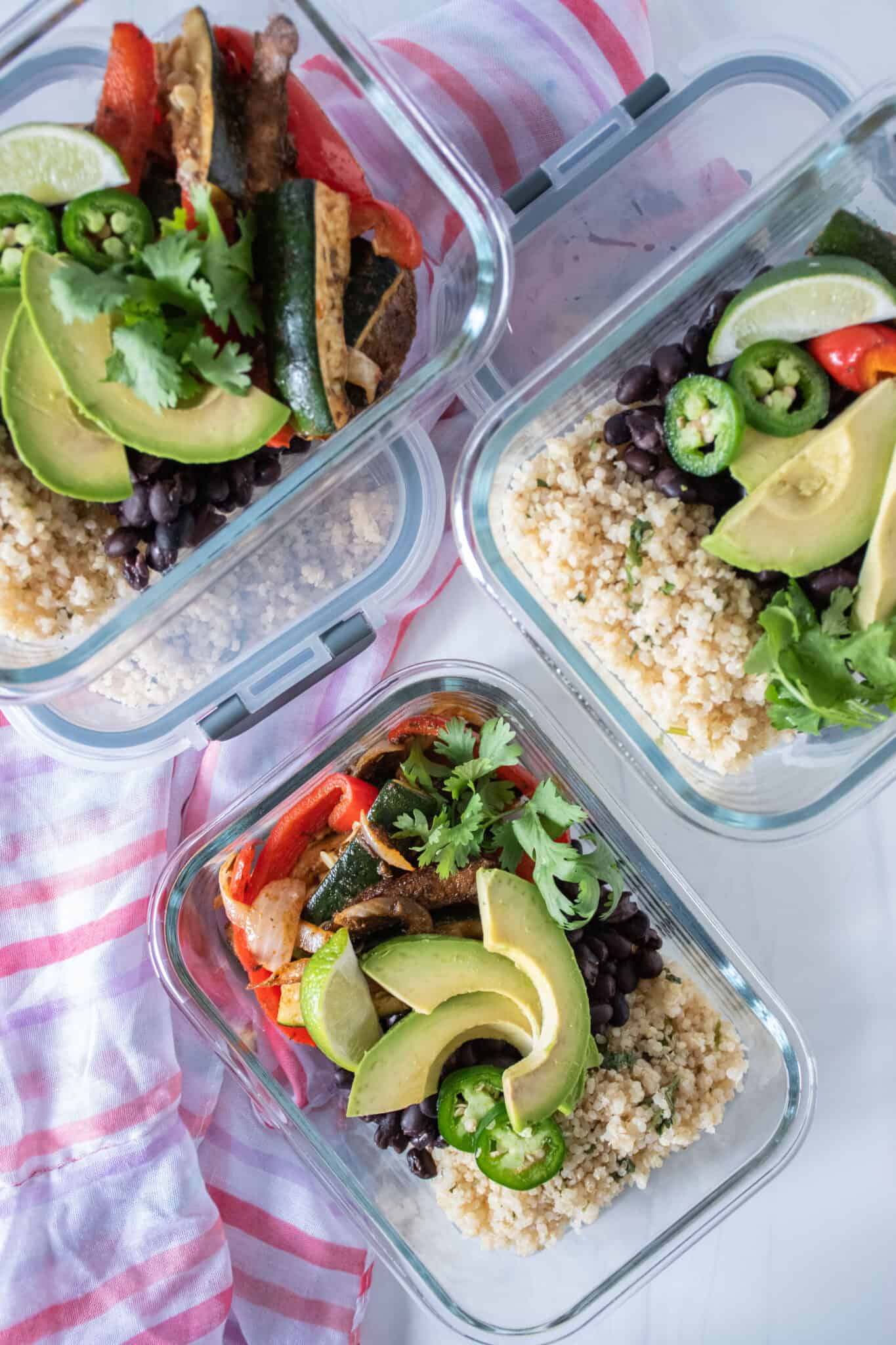
It's a common idea that plants and high protein can't go together. But nothing could be further from the truth! While it might take a little deliberate planning at first, plant based meals can provide you all the protein you need (and then some!). Our heart healthy high protein lunches feature black beans, chickpeas, lentils, tofu, and tempeh, and pairing them with veggies and whole grains for extra staying power.
These high protein plant based meals all feature at least 15 grams of protein (that's 30% daily value [DV]!), and are also high in fiber and low in saturated fat, to help you feel healthy and satisfied through the day. They've also been selected specifically to be easy to pack in a lunchbox for work, and to be able to meal prep ahead of time!
Jump to:
- Eating Complementary Proteins
- Meal Prep Tips
- The Recipes
- Mashed Chickpea Salad Sandwiches with Everything Bagel Seasoning
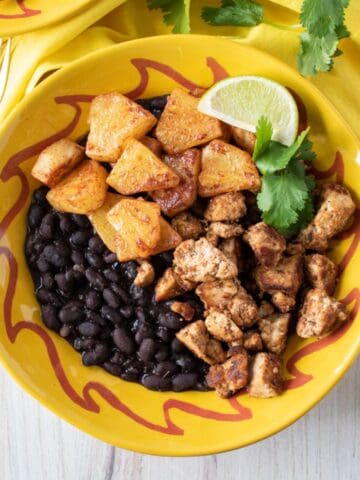
- Jerk Tofu with Caramelized Pineapple
- Healthy Burrito Bowls
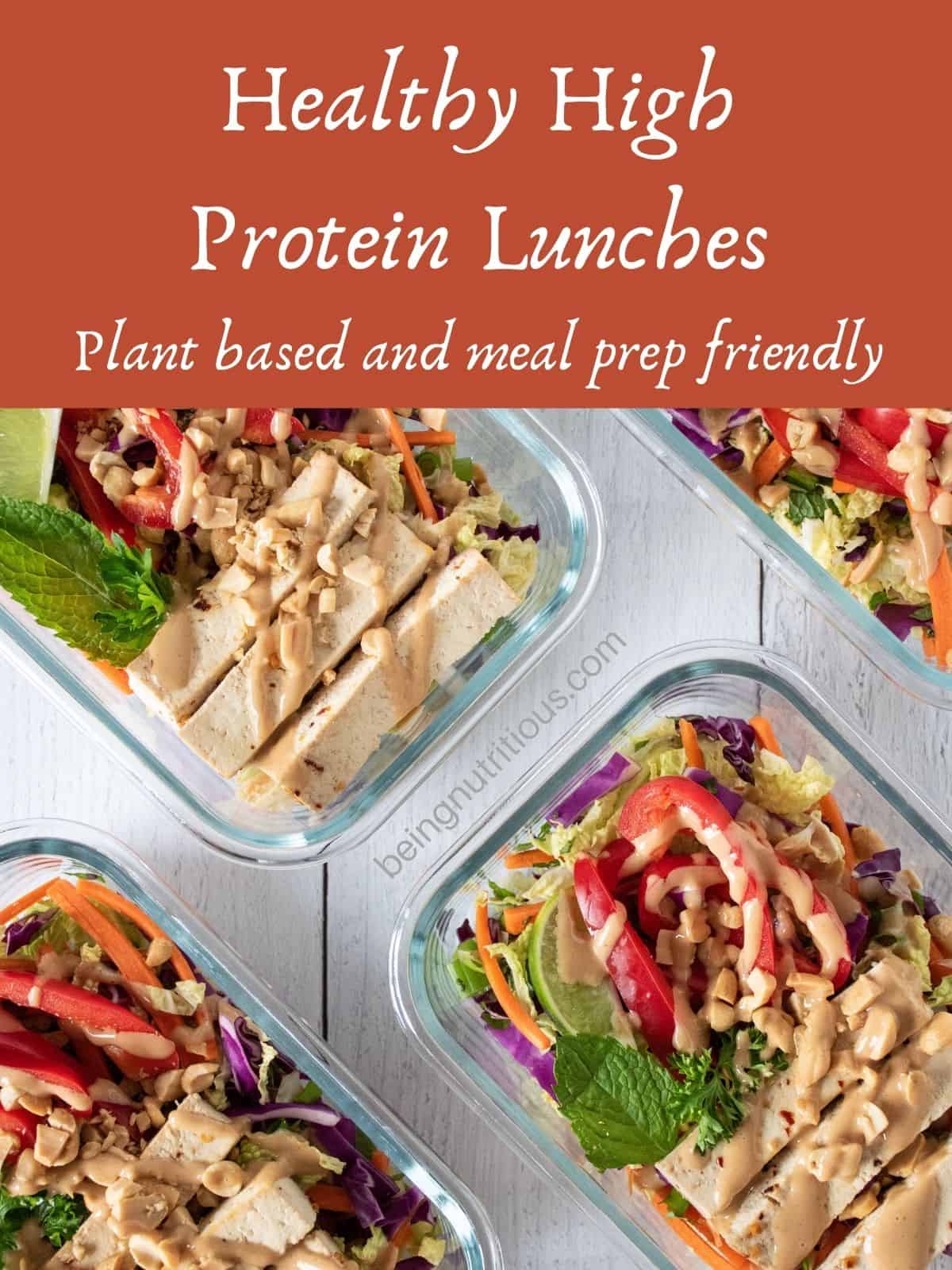
- Thai Salad with Peanut Dressing
- Slow Cooker Cincinnati Chili
- Eggless Quiche with Spring Veggies
- White Bean Veggie Chili
- Sesame Tofu Stir Fry
- Sauteed Tempeh with Caramelized Onions and Grapes
- Vegan Three Bean Chili
- Chickpea Meatballs with Sweet and Sour Sauce
- Low Sodium Mushroom Chili
- Bonus Snack Recipe: Garlic Roasted Chickpeas
- FAQ
Eating Complementary Proteins
Traditional advice is that, if you eat plant based proteins that are considered "incomplete," you should pair them with another food that contains the missing amino acids to make a "complete" protein. This is where the advice to eat beans with rice comes from. These are so-called complementary proteins. But is it true? In a word, no. The advice has largely been debunked.
What are complete and incomplete proteins?
Proteins are made up of building blocks called amino acids. Each protein has a slightly different make up. When you eat protein, your body breaks it down into the individual amino acids, and then rearranges them to make what it needs. There are 20 different amino acids. Nine of these are considered essential amino acids. That means you need to eat them for your body to get them. The other 11 are considered nonessential amino acids. Not because your body doesn't need them, but because your body can make them itself.
Complete proteins are foods that contain all 9 of the essential amino acids. These are foods like meat, fish, eggs, dairy, soy, and quinoa.
Incomplete proteins are foods that are low in one or more essential amino acids. These are foods like beans, nuts, rice, and wheat.
What are complementary proteins?
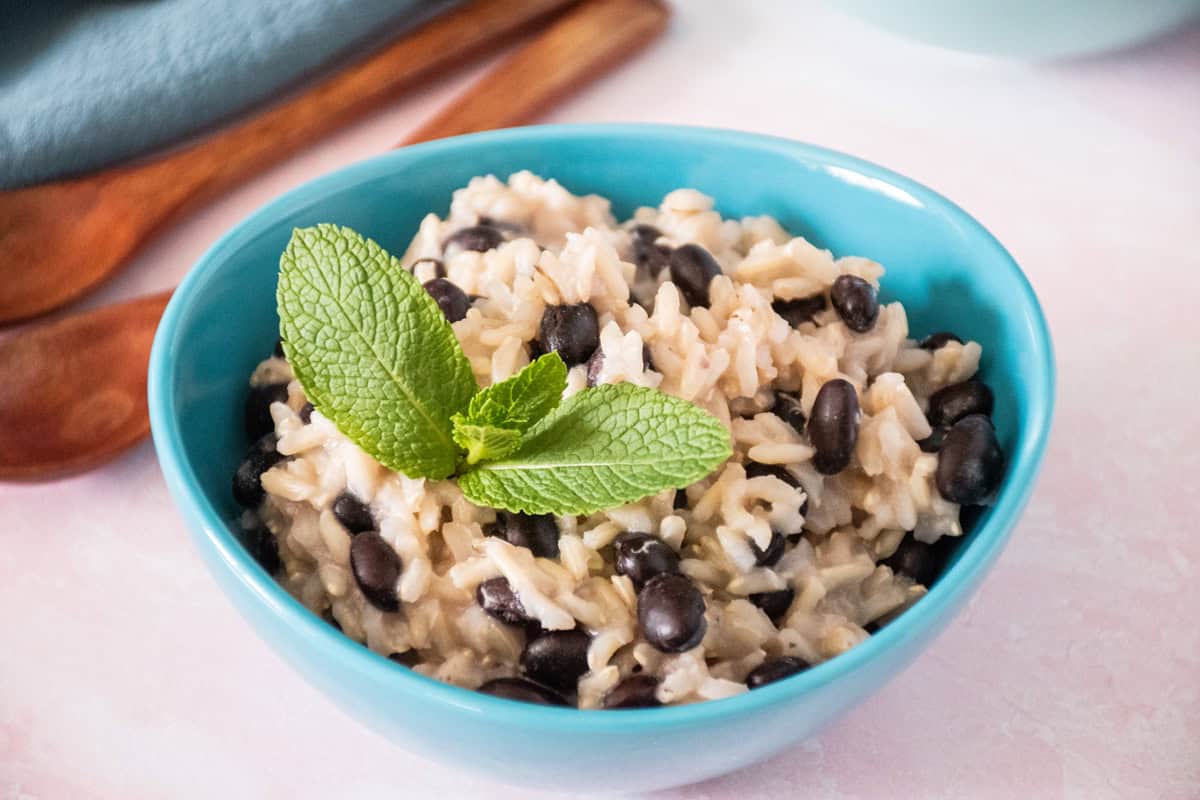
So then, complementary proteins are two foods that fill each others' amino acid gaps. For example, beans are low in methionine, but they are high in lysine. Rice is low in lysine, but high in methionine. Together they contain all 9 essential amino acids. Other common pairings are hummus and pitas, and peanut butter and bread.
What's the science on complementary proteins?
We now know it's not necessary to stress about making sure to eat complementary proteins in the same meal. As long as you're eating a variety of protein foods throughout the day, your body will be able to pull all the amino acids it needs to build and repair itself (1).
A caveat: If you are someone who just squeaks in getting enough protein daily (use this calculator to estimate your needs), or if you are older than 60 years old, you may want to consider pairing complementary proteins, as this seems to significantly increase the bioavailability of methionine - one of the essential amino acids (2, 3).
Meal Prep Tips
Containers
I am a huge fan of using what you have. Not only does it mean you don't have to spend more money, but it means not buying more things that contribute to consumeristic waste. So, if you have some containers that will work, even if they don't match, by all means, use them!
But if you're starting from scratch, you do need something to put your healthy high protein lunches in. I like glass containers for meal prep for a few reasons. Firstly, they don't break down with repeated microwaving, and your food won't burn to them. When food burns to plastic containers, it renders them unsafe, and they should be tossed.
Secondly, glass will hold up to years of dishwasher cycles. Plastic will start to degrade after about a year. Sometimes less.
On the other hand, glass containers are heavier than plastic, and prone to breaking if dropped. They also may not be able to withstand extreme temperature changes, meaning going from fridge to microwave could present an issue.
I like these 36 ounce glass food storage containers for holding whole meals. They are nicely sized, and come in a pack of 5 so you can prep the whole week at once. While the plastic lid shouldn't be used in the microwave (it can warp), these containers are safe for the freezer, microwave, oven, and dishwasher, making them fabulously versatile.
Compartmentalized containers like these are great for fresh foods and snacks that you want to keep separate. Small condiment containers are perfect for keepings dips and dressings separate.
Don't forget snacks
Sometimes we get so wrapped up in making sure we have lunch, we forget that we hit that mid morning slump around 10:00, and are dragging again around 3:00! Make sure to plan nutritious snacks that are high in at least 2 of these: protein, fiber, healthy fat.
Here are some examples: Peanut butter and apple slices, hummus with carrots and celery, a handful of low sodium nuts.
Get my exclusive guide to healthy snacking for many more ideas!
Longevity of prepped meals
Both food safety and quality are important to keep in mind when you choose recipes for meal prep. While all the recipes in our list are perfect, not all recipes you come across are.
Always take a look at the number of days leftovers will be good for. This means both that they will be safe, and that they will still be in a state you'd want to eat them, for a certain time. Most leftovers are safe and good quality for about 5 days. Some are much less than that, and those are the ones you probably don't want to meal prep.
For example, our Watermelon Peach Salad will be safe to consume for about 4-5 days, but will start breaking down within a day of making it. This would not be very good for meal prep!
The Italian Lentil and Rice Casserole, on the other hand, would be great for meal prep, because it will likely be both safe and good quality for at least 5 days.
The Recipes
Mashed Chickpea Salad Sandwiches with Everything Bagel Seasoning
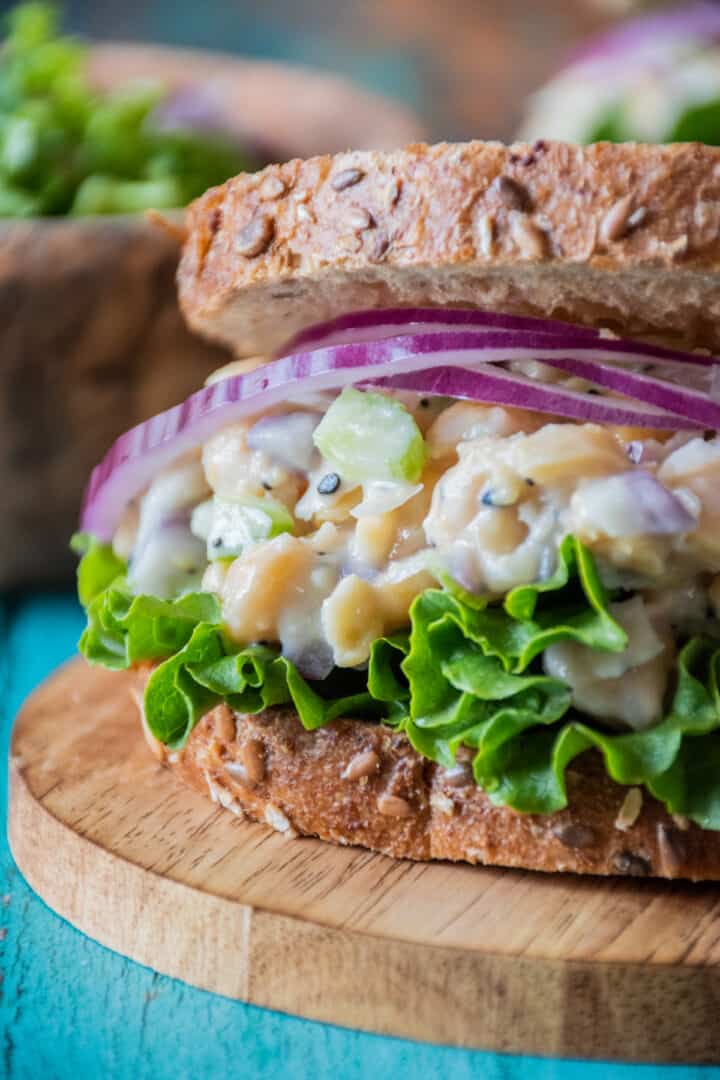
Dive into a creamy, dairy-free Mashed Chickpea Salad seasoned with everything bagel spice for a delectable sandwich filling, using simple ingredients like chickpeas, red onion, and cashew milk yogurt. It's not only a flavorful meal prep option but also serves as a heart-healthy choice that's perfect in a sandwich, pita, or wrap.
- Protein: 15 grams per serving
- Prep time: 10 minutes
- Fridge life: 4-5 days (chickpea salad alone - the sandwich should be assembled the day of)
- Freezer friendly: No
- Main ingredients: chickpeas, onion, celery, cashew yogurt
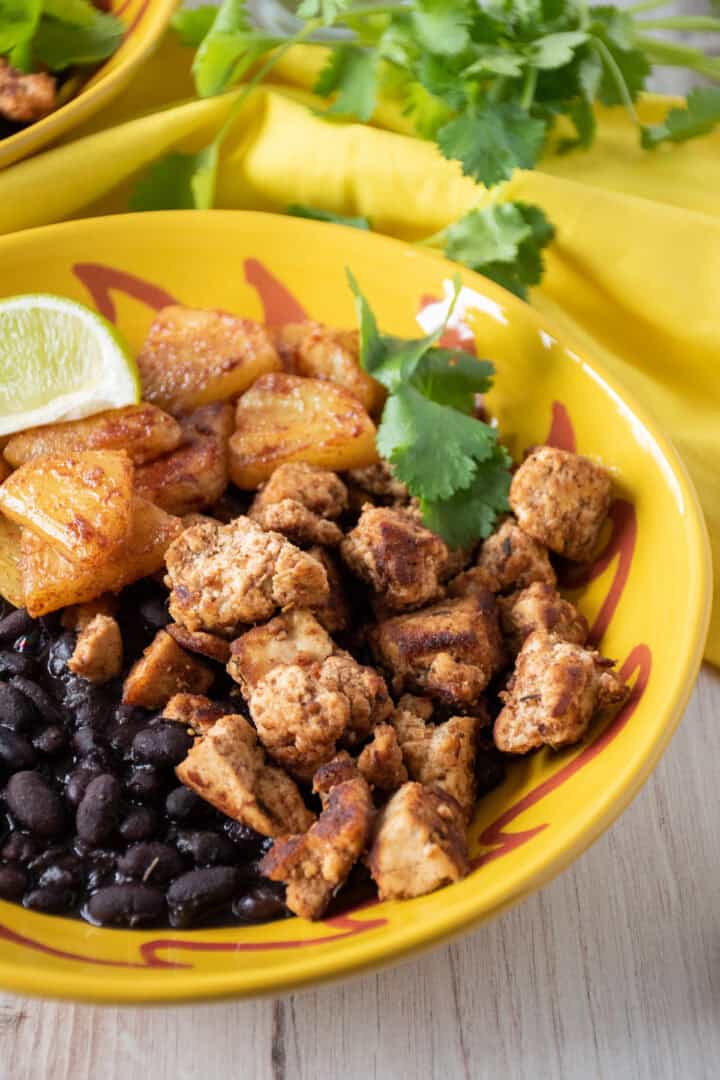
Jerk Tofu with Caramelized Pineapple
Delight in a taste of the Caribbean with Jerk Tofu and Caramelized Pineapple. Mildly spicy and sweet, with a little tang, in a deeply warming meal you will want to make on repeat. Just 30 minutes from fridge to table! (Get an extra 16 grams of protein by serving with a cup of Cuban Black Beans!)
- Protein: 20 grams per serving
- Prep time: 30 minutes
- Fridge life: 5-7 days
- Freezer friendly: Yes
- Best reheat method: Microwave
- Main ingredients: tofu, pineapple, jerk seasoning
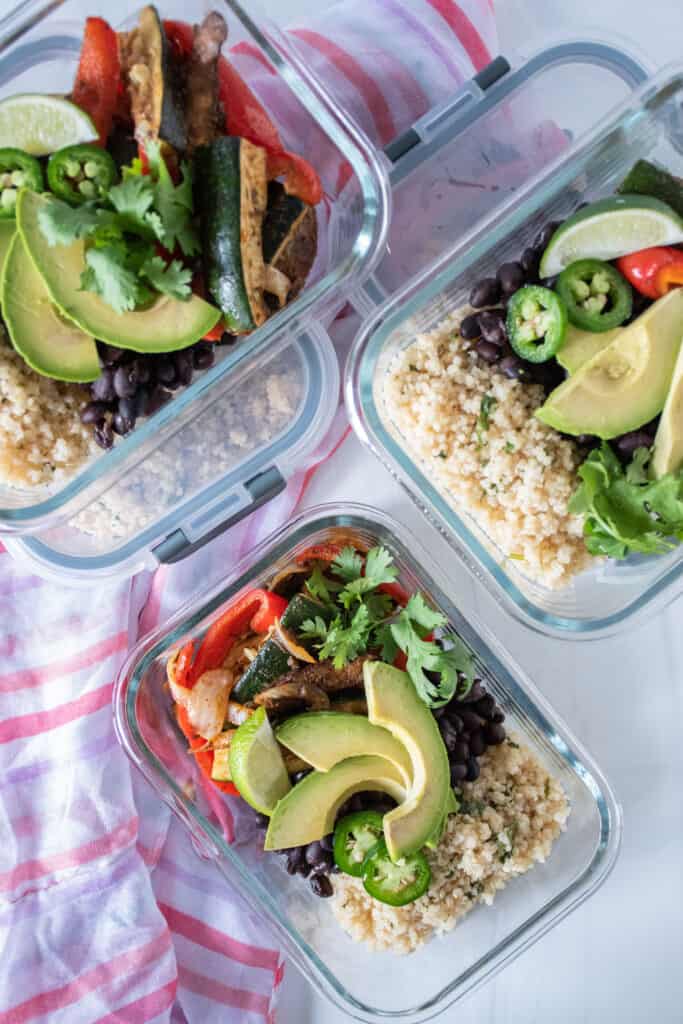
Healthy Burrito Bowls
These healthy burrito bowls are perfect for meal prep! And this recipe makes 5 meals, so you're set for the week! Delicious cilantro lime quinoa, black beans, and a customizable variety of taco seasoned, roasted veggies. Check and mate!
- Protein: 16 grams per serving
- Prep time: 30 minutes
- Fridge life: 5 days
- Freezer friendly: Yes, without fresh toppings
- Best reheat method: Microwave (remove any fresh toppings)
- Main ingredients: black beans, zucchini, bell pepper, mushrooms, quinoa
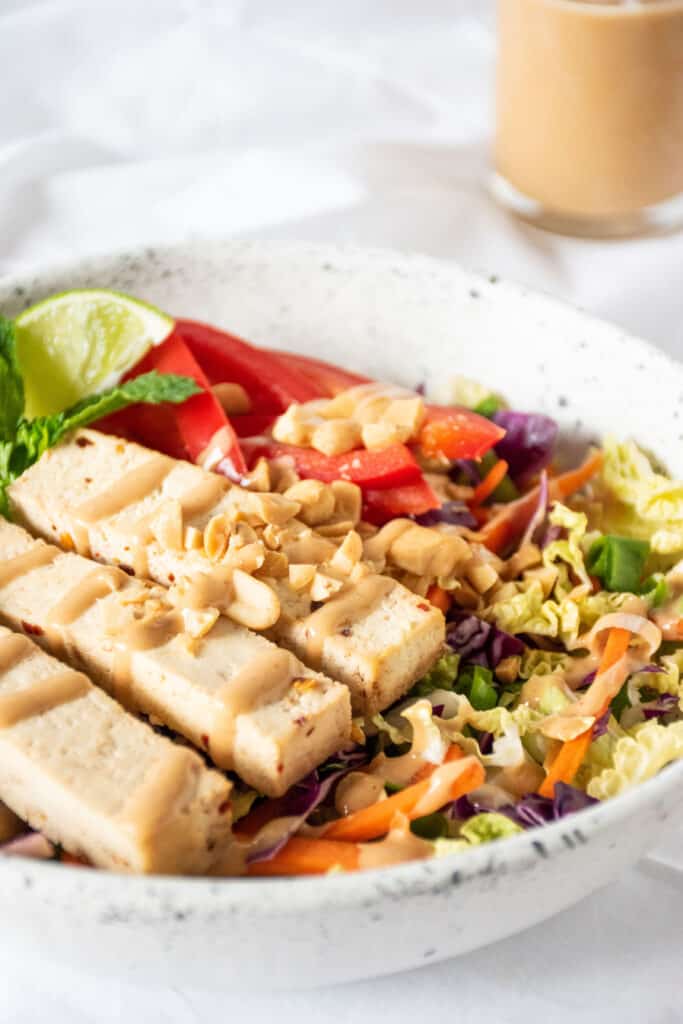
Thai Salad with Peanut Dressing
Thai salad with peanut dressing is super easy to throw together, and great for lunch, dinner, or weekend salad meal prep! The peanut dressing comes together quick, too, and packs tons of flavor. This is one of those recipes you'll come back to over and over again!
- Protein: 19 grams per serving
- Prep time: 45 minutes
- Fridge life: 4-5 days
- Freezer friendly: No
- Main ingredients: tofu, shredded cabbage, carrots, bell pepper, peanut butter
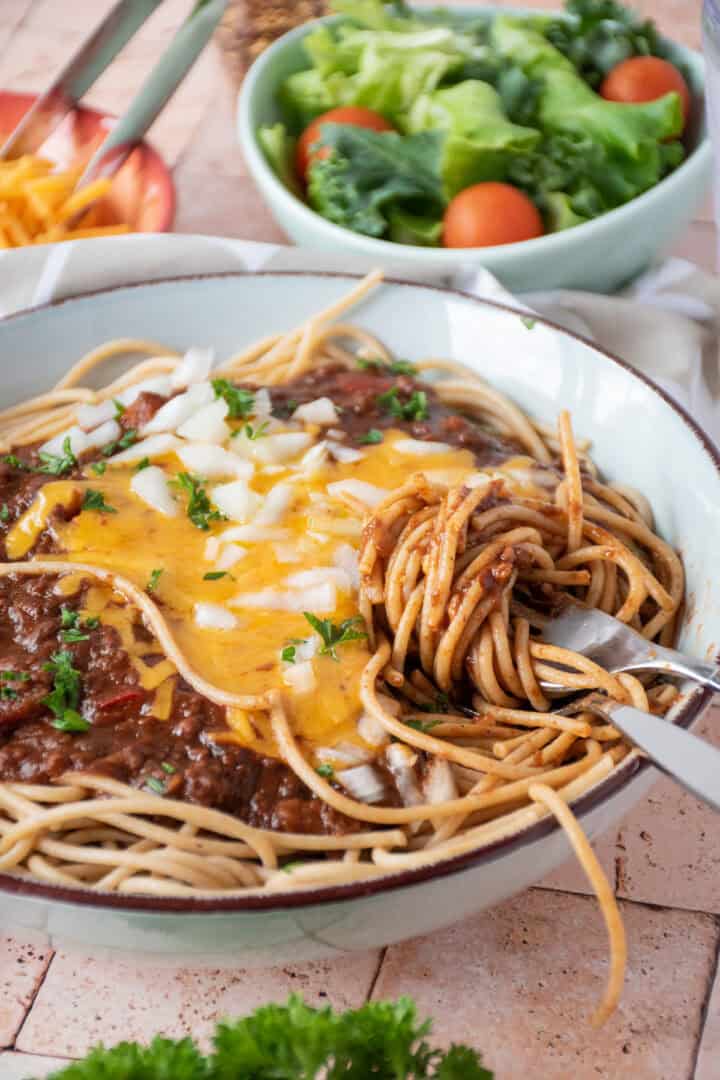
Slow Cooker Cincinnati Chili
Sometimes called Skyline Chili, too. This version has all the amazing spices of traditional Cincinnati Chili, with a few healthy modifications! Perfect for hands-off meal prep. The Crock Pot makes it possible!
- Protein: 18 grams per serving
- Prep time: 30 minutes active time
- Fridge life: 5-7 days
- Freezer friendly: Yes, without pasta
- Best reheat method: Microwave or stove
- Main ingredients: black urad dal (or brown lentils), tomato sauce, mushrooms, peppers, carrots, whole wheat spaghetti
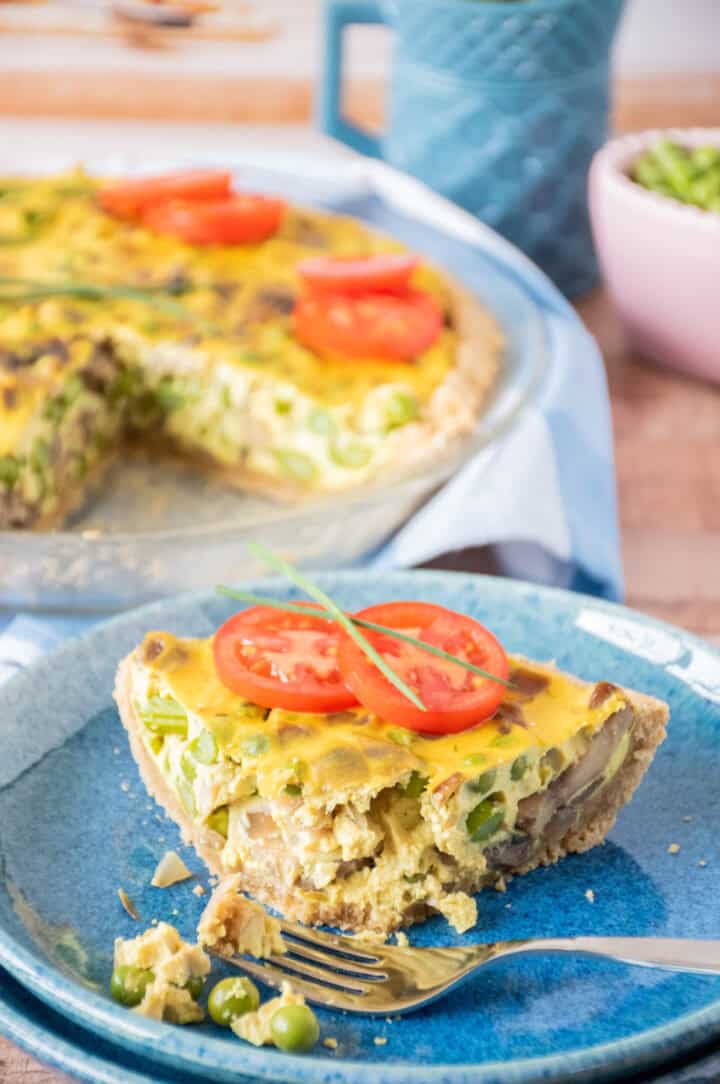
Eggless Quiche with Spring Veggies
Eggless Quiche capitalizes on fresh, spring produce to get you out of that Winter rut. A quick no-roll crust, and egg free filling make this simple and budget-friendly meal that reheats wonderfully.
- Protein: 15 grams per serving
- Prep time: 65 minutes
- Fridge life: 4 days
- Freezer friendly: Yes
- Best reheat method: Microwave
- Main ingredients: tofu, mushrooms, asparagus, peas, whole wheat pastry flour, quick oats
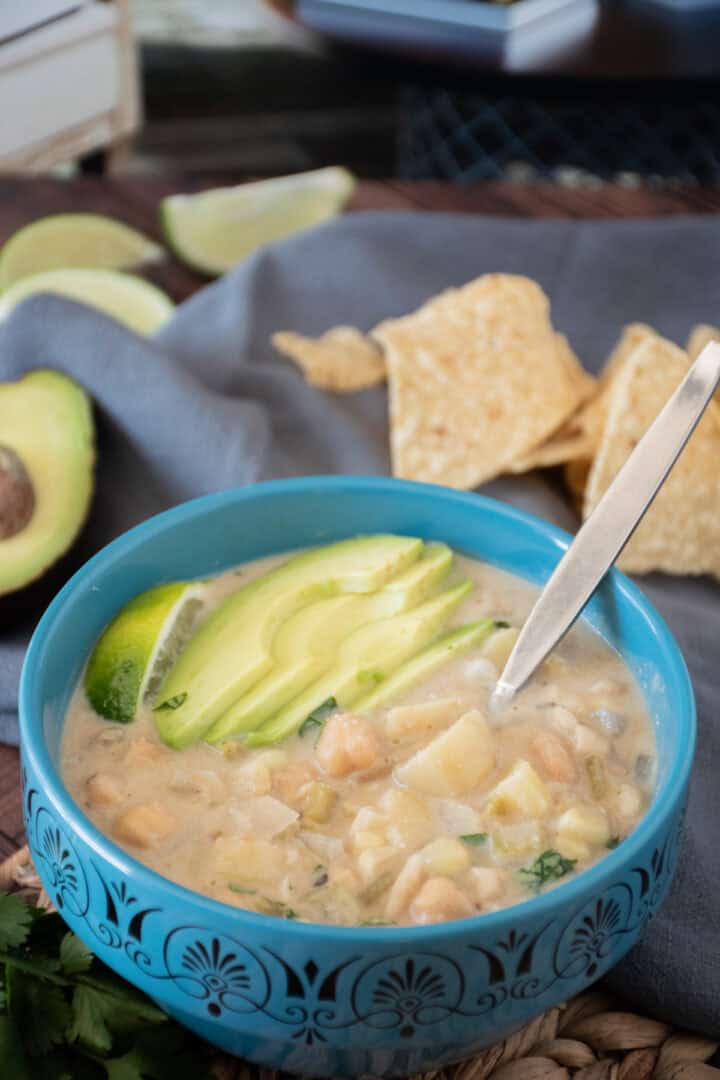
White Bean Veggie Chili
A hearty, creamy, and mildly spicy chili, perfect for frigid winter days. We pack in two kinds of beans, along with parsnips, onions, and corn, to make our chili filling and satisfying.
- Protein: 21 grams per serving
- Prep time: 40 minutes
- Fridge life: 5-7 days
- Freezer friendly: Yes
- Best reheat method: Microwave
- Main ingredients: chickpeas, white beans, parsnips, corn, green chilies
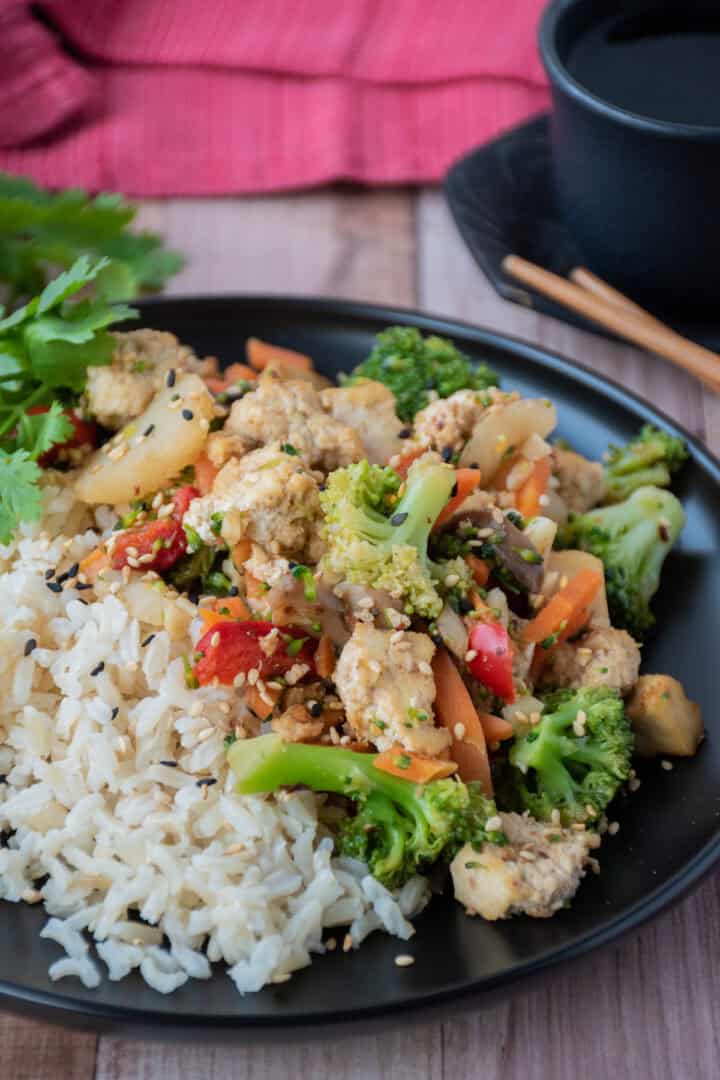
Sesame Tofu Stir Fry
Ditch the high sodium, high calorie restaurant stir fry dishes, and whip up this delicious and easy Sesame Tofu Stir Fry! Add brown rice for a complete meal. This stir fry uses frozen stir fry veggies for ease and cost savings, and reheats well all week!
- Protein: 21 grams per serving
- Prep time: 30 minutes
- Fridge life: 5 days
- Freezer friendly: Yes
- Best reheat method: Microwave
- Main ingredients: tofu, frozen stir fry vegetables, garlic, low sodium soy sauce
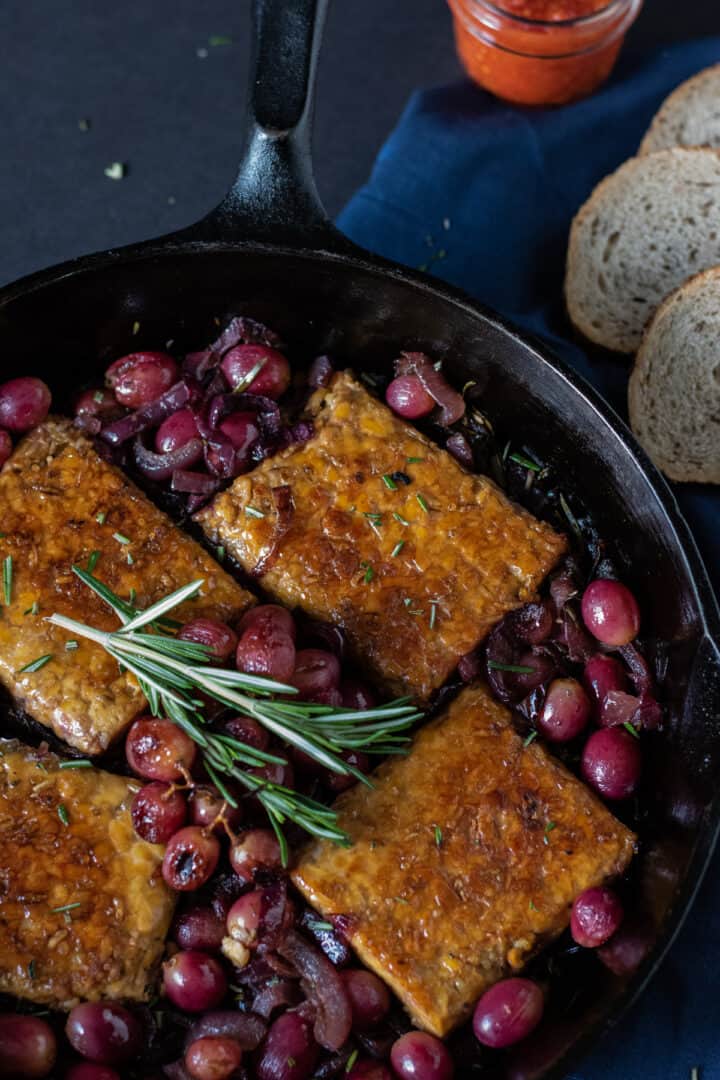
Sauteed Tempeh with Caramelized Onions and Grapes
This is an easy recipe for tempeh if you've never cooked with it before. We start with delicious caramelized onions, and then add some cooking wine and red grapes for a little sweetness. We finish off this easy Sautéed Tempeh recipe with fresh rosemary. The slight piney and citrus notes play off the sweetness in a way that screams Fall.
- Protein: 24 grams per serving
- Prep time: 50 minutes
- Fridge life: 5-7 days
- Freezer friendly: No
- Best reheat method: Microwave
- Main ingredients: tempeh, onions, vegetable stock, grapes
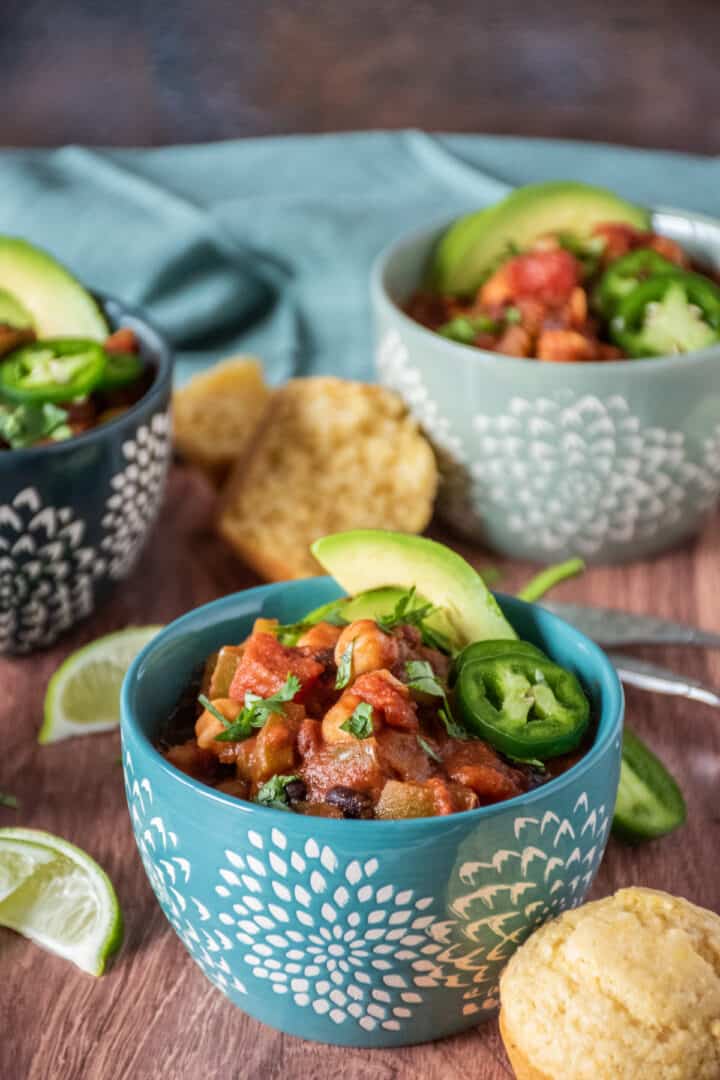
Vegan Three Bean Chili
A thick and hearty, stick-to-your-ribs kind of meal! It comes together quickly, and just simmers on the stove until you're ready for it. We keep it simple using mostly canned items and a variety of spices that you expect in a traditional chili.
- Protein: 20 grams per serving
- Prep time: 60 minutes
- Fridge life: 5-7 days
- Freezer friendly: Yes
- Best reheat method: Stove or microwave
- Main ingredients: kidney beans, black beans, chickpeas, tomato sauce, diced tomatoes, bell pepper, onion
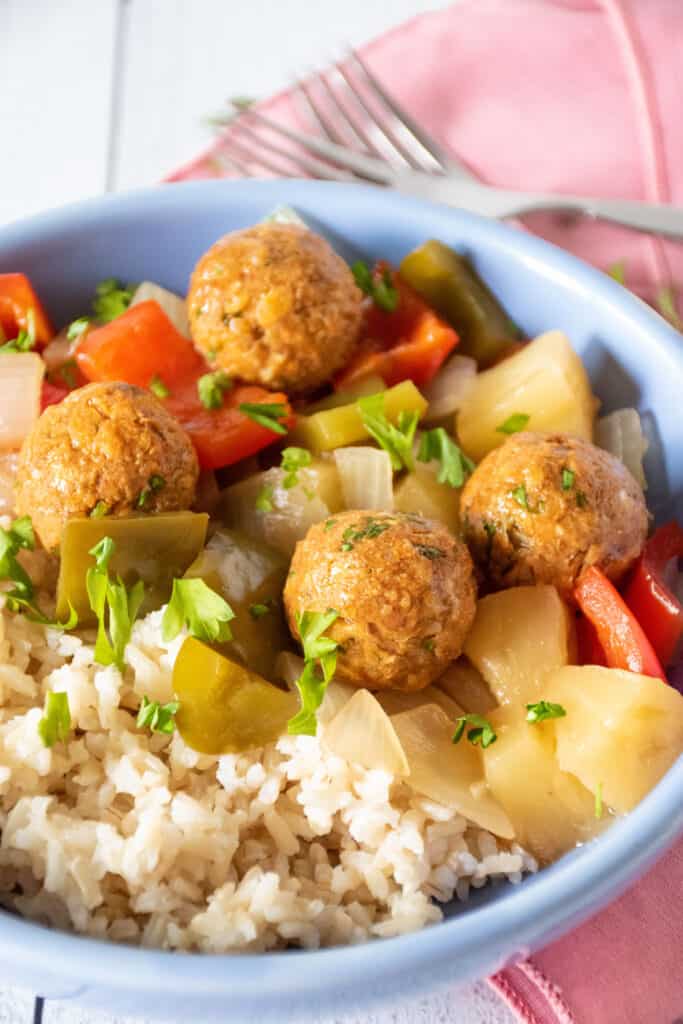
Chickpea Meatballs with Sweet and Sour Sauce
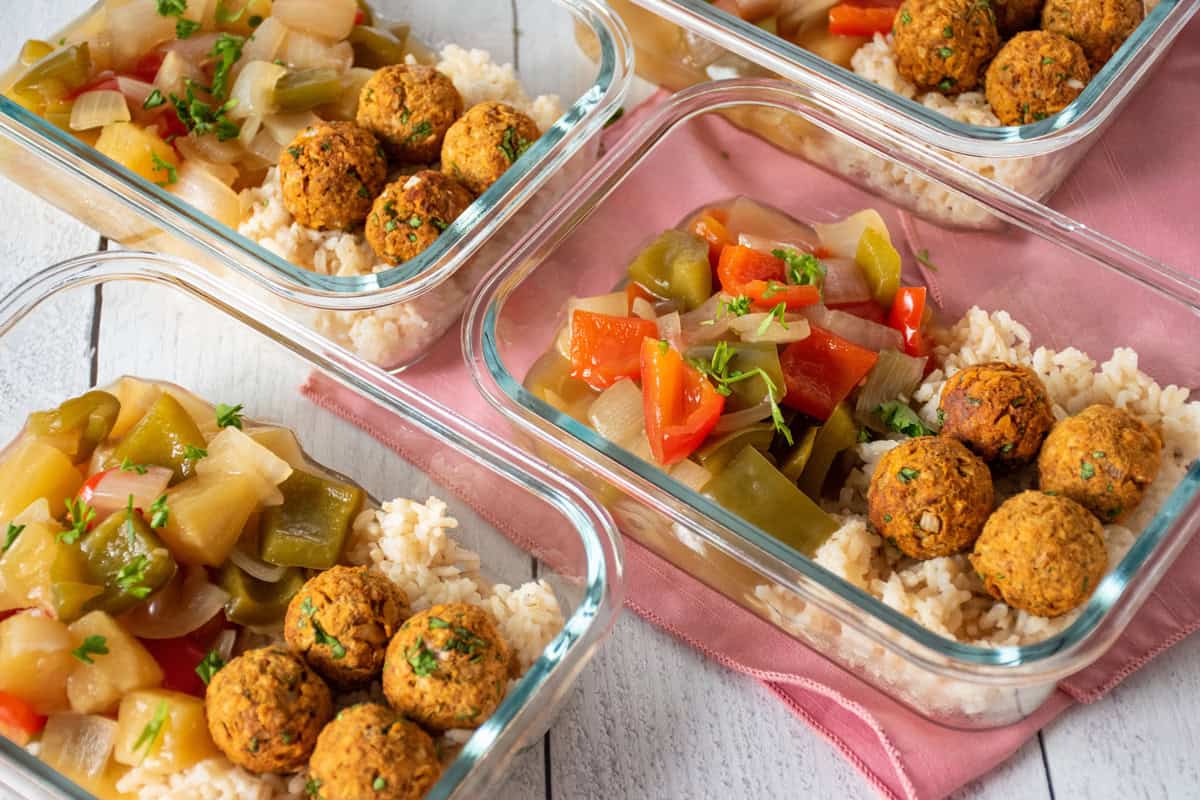
These Chickpea Meatballs have it all! Sweet and tangy sauce, over the top flavor, and completely plant based! Did we mention they are meal prep friendly, too? These healthy sweet and sour meatballs will have you looking forward to lunch all day long!
- Protein: 15 grams per serving
- Prep time: 40 minutes
- Fridge life: 5 days
- Freezer friendly: Yes (without the sauce)
- Best reheat method: Microwave
- Main ingredients: chickpeas, bell peppers, onions, pineapple
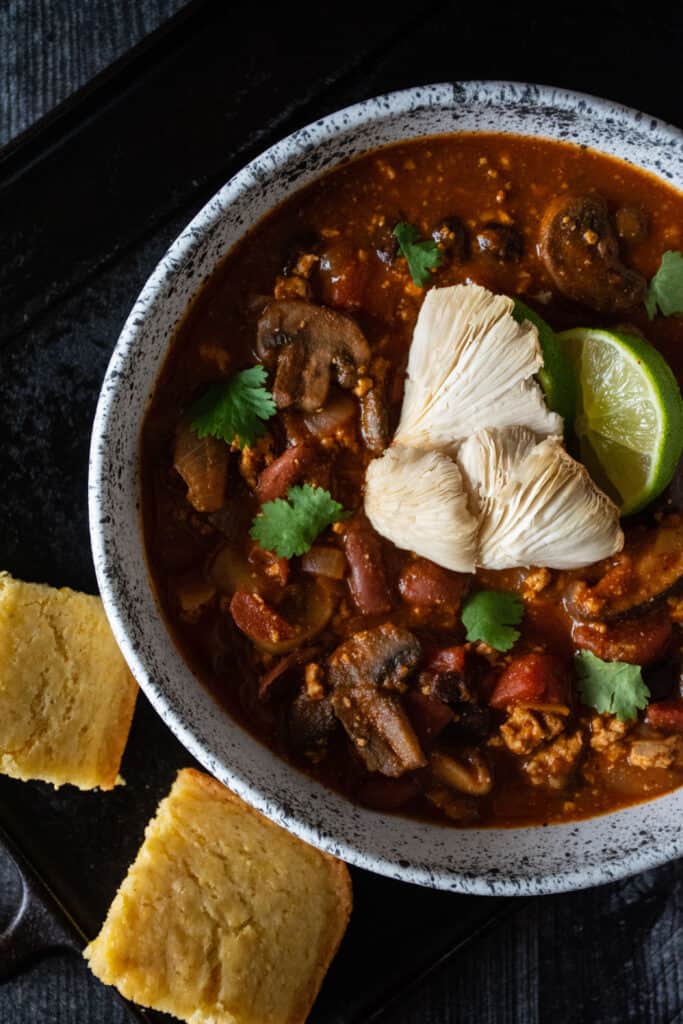
Low Sodium Mushroom Chili
Do you love mushrooms? Then this is just the warming bowl of chili you'll want to make on repeat! Mushroom chili is heart healthy, hearty, high protein, and vegan. So delicious, too! Make a big pot of this meal prep friendly, low sodium chili today!
- Protein: 25 grams per serving
- Prep time: 45 minutes
- Fridge life: 5-7 days
- Freezer friendly: Yes
- Best reheat method: Microwave or stove
- Main ingredients: tofu, mushrooms, black beans, kidney beans, vegetable stock, diced tomatoes
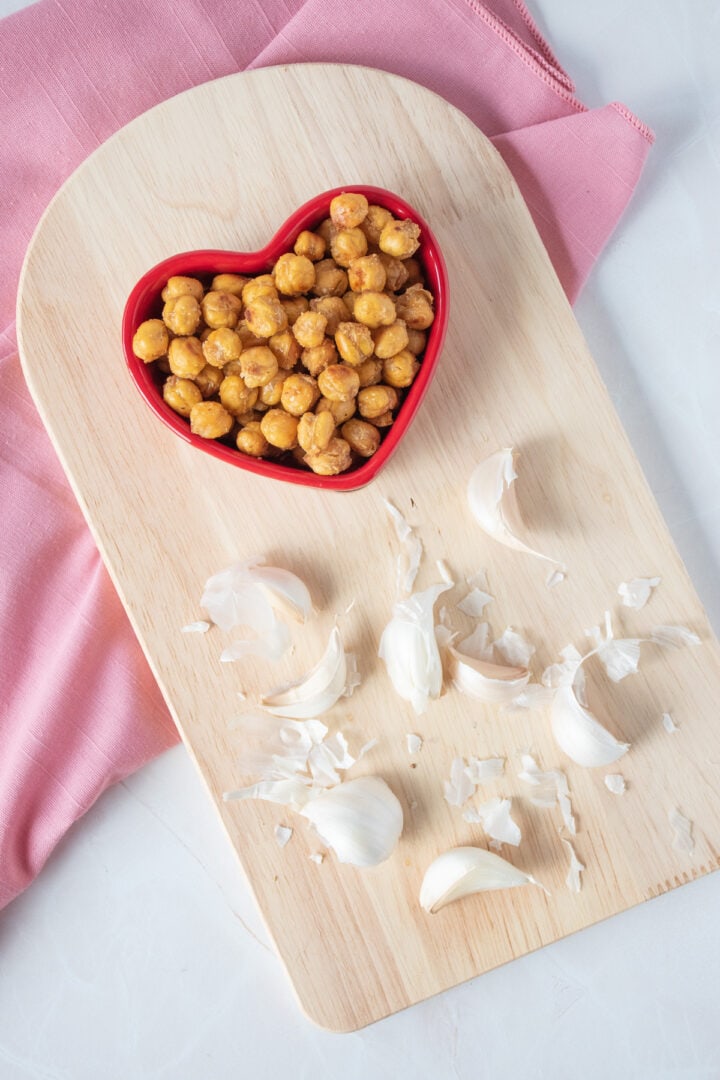
Bonus Snack Recipe: Garlic Roasted Chickpeas
A high protein, low salt, easy to make snack! Garlic Roasted Chickpeas are as easy as stirring ingredients and baking, these heart healthy snacks travel well to keep you fueled for work or errands. A little garlicky and a little salty, they're perfect for noshing on anytime.
- Protein: 7 grams per serving
- Prep time: 35 minutes
- Fridge life: 5-7 days
- Freezer friendly: No
- Main ingredients: chickpeas, olive oil, garlic powder
FAQ
Most of these recipes can be prepped and refrigerated for up to 5-7 days! A few will start to break down more quickly, and I've noted that within the descriptions above.
Most foods contain at least a little protein, and that adds up over the day, so most people, even vegans, don't have too much trouble eating enough protein. The plant-based foods highest in protein are tofu, tempeh, seitan, edamame, lentils, chickpeas, black beans, etc. Build meals around these foods, pair with a whole grain (a few more grams of protein), and a veggie (another gram or two), and you'll be set!
I like glass containers for meal prep for a few reasons. Firstly, they don't break down with repeated microwaving, and your food won't burn to them. When food burns to plastic containers, it renders them unsafe, and they should be tossed. Secondly, glass will hold up to years of dishwasher cycles. Plastic will start to degrade after about a year. Sometimes less. See more recommendations above.
Got a favorite healthy high protein meal that's great for meal prep? Let me know what you love in the comments!


Leave a Reply